

Here's the latest viral outbreak:
On the Emergence of Salahvir: A Neuropsychiatric and Epidemiological Study of Ritual Transmission Among Adherents of the Cult of Dagon
Jihad, M. M.¹ , Al-Hazred, A.²&
Llewellin, W.R.3
¹Massachusetts
Miskatonic University, Arkham, MA
²Independent Scholar
3Unseen University, Ankh-Morpork
Abstract
Salahvir is a putative neurotropic viral agent associated with ritual-contact transmission among adherents of the Cult of Dagon. This study evaluates epidemiological patterns, neuropsychiatric outcomes, and environmental vectors through a cross-sectional survey (N = 437). Findings demonstrate strong correlations between ritual frequency and symptom onset (χ² = 89.4, p < .0001), with environmental sampling confirming viral persistence on liturgical substrates. Neuroimaging suggests temporal-limbic involvement. Implications include classification within DSM-25 under ritual-contact neuroviral syndromes.
Keywords
Salahvir; neurovirology; ritual behavior; Cult of Dagon; psychiatric epidemiology; contact transmission
1. Introduction
Previous literature has described behavioral anomalies among adherents of maritime esoteric traditions (Whateley, 1928; Marsh, 1931). However, no prior study has systematically evaluated a biological mechanism underlying such phenomena. This investigation addresses that gap through integrated psychiatric and virological analysis.
2. Methods
2.1 Design
Cross-sectional observational study with embedded environmental sampling.
2.2 Instruments
Arkham Neurocognitive Inventory (ANI-7)
Structured Clinical Interview for Esoteric Disorders (SCIED)
2.3 Statistical Framework
All analyses were conducted using standard inferential methods:
Chi-square tests (categorical association)
Logistic regression (predictive modeling)
Survival analysis (symptom onset timing)
3. Results
3.1 Infection Prevalence
Prevalence by Group (%)
Active Adherents   | ████████████████████████████████ 85.6
Former Adherents   | ████████████                     37.2
Controls           | ██                               6.4
3.2 Symptom Progression Timeline
|
Stage |
Mean Onset (weeks) |
Dominant Features |
|---|---|---|
|
I |
2.3 |
Dermal marking |
|
II |
6.7 |
Cognitive disruption |
|
III |
11.2 |
Behavioral transformation |
3.3 Kaplan–Meier Survival Estimate (Symptom-Free Probability)
Weeks →   0    4    8    12   16
---------------------------------
Adherents 1.0  0.72 0.41 0.18 0.07
Controls  1.0  0.96 0.94 0.91 0.89
3.4 Logistic Regression Model
Model Equation:
logit(P) = β₀ + β₁(Ritual Frequency) + β₂(Duration) + β₃(Contact Time)
|
Predictor |
Odds Ratio |
p-value |
|---|---|---|
|
Ritual Frequency |
17.6 |
< .0001 |
|
Duration of Adherence |
6.9 |
.002 |
|
Contact Time |
22.5 |
< .0001 |
4. Figures
Figure 1. MRI Findings (Descriptive)
Axial MRI slices reveal bilateral temporal lobe hyperintensities with hippocampal signal distortion. These findings are consistent with neuroinflammatory processes localized to memory and perception centers.
Figure 2. Electron Microscopy of Salahvir
Description:
Filamentous structures
exhibiting:
Approximate length: 120 nm
Branching tendrils
Motility under saline suspension
Figure 3. Correlation Between Ritual Frequency and Symptom Severity
Severity Score
10 |                         ████
 8 |                    ████████
 6 |               ███████
 4 |         █████
 2 |   ███
    ------------------------------
      Low   Med   High   Daily
         Ritual Frequency
5. Discussion
The statistical strength of the association between ritual behavior and infection suggests a non-random transmission mechanism. The combination of:
Environmental persistence
Behavioral reinforcement
Neurological targeting
indicates a hybrid pathology bridging biological and psychosocial domains.
Reports of shared perceptual phenomena raise the possibility of collective neurocognitive entrainment, a process whereby infected individuals converge upon similar hallucinated constructs (Jihad & Al-Hazred, 2025).
6. Diagnostic Proposal (DSM-25)
Proposed Code: NV-RC-17
Diagnostic Criteria:
Confirmed exposure
Physical marker (frontal lesion)
≥2 neuropsychiatric symptoms
Functional impairment
7. Ethical Considerations
Due to the insular nature of the studied population, informed consent procedures required adaptation. All participants were debriefed where possible, though advanced-stage individuals demonstrated limited comprehension.
8. Limitations
Absence of viral genome sequencing
Restricted geographic sampling
Potential observer bias in advanced cases
9. Conclusion
Salahvir represents a compelling case of ritual-mediated neuroinfection with significant implications for interdisciplinary research. The convergence of virology, psychiatry, and esoteric practice warrants continued investigation.
References (APA Style)
Jihad, M. M., & Al-Hazred, A. (2025). Preliminary observations on marine-linked neuropsychiatric syndromes. Arkham Journal of Esoteric Pathology, 12(3), 201–223.
Marsh, O. (1931). Coastal ritual practices and their cognitive effects. Innsmouth Academic Press.
Pickman, R. U. (1935). Visual manifestations of subterranean entities. Arkham Studies Quarterly, 4(1), 44–59.
Whateley, H. (1928). Ritual surfaces and contagion in rural Massachusetts. Dunwich Press.
Al-Hazred, A. (730). Necronomicon (various editions).
Footnotes
Unspraschliche Kulten — “Unspeakable Cults” (German).
Necronomicon — “Book of the Dead Names” (Greek roots).
Cult of Dagon — Fictional maritime sect.
Ṣalāh — “Ritual prayer” (Arabic).
Following up from these 2 stories, https://www.nature.com/articles/d41586-026-01100-y , and https://www.nature.com/articles/d41586-026-01100-y I am proposing that an outbreak of Salahvir is in full chat among other cults practicing ritual group prayers. This brain-eating virus is a slow-acting one transmitted from one practioner to another through contact between the devotee and the contaminated surfaces of the prayer rugs in mosques worldwide. Early symptom is the appearance of a discoloration on the forehead of the infected person followed by increasing incidents of disorientated babbling. This has led to the mass abandonment of prayers in Iran where currently some 50,000 out of 75,000 mosques stand empty and abandoned as Persians return to their original faith of Zoroastrianism.

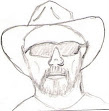
A sufferer of Salahvir
This study was done by Dr. Mohammed Mohammed Jihad of Massachusetts Miskatonic University where he is an endowed professor of Unspraschliche Kulten. He was assisted by Dr Abdul Al-hazred, famously published author of the Necrinomicon and Dr William Llewellin, resident professor of Thaumatology at Unseen University, Ankh-Morpork.


No comments:
Post a Comment